Ludwig II Monuments in Bavaria
In the Footsteps of the Fairy-Tale King – Monuments, Memorials and Their Remarkable Stories
King Ludwig II left an enduring mark on history, not only through his magnificent castles but also through his extraordinary personality. Throughout Bavaria, numerous monuments still commemorate the monarch, whose enduring appeal has extended far beyond his lifetime. Each monument has its own story to tell – of royal admiration, civic commitment, remarkable encounters and, not least, the destruction wrought during the Nazi era.
Some of these memorials have survived to this day, whilst others were destroyed, relocated or subsequently restored. Together, they form a fascinating chapter in Bavaria’s cultural heritage and history of remembrance.
Munich – The Royal Family at the New Town Hall
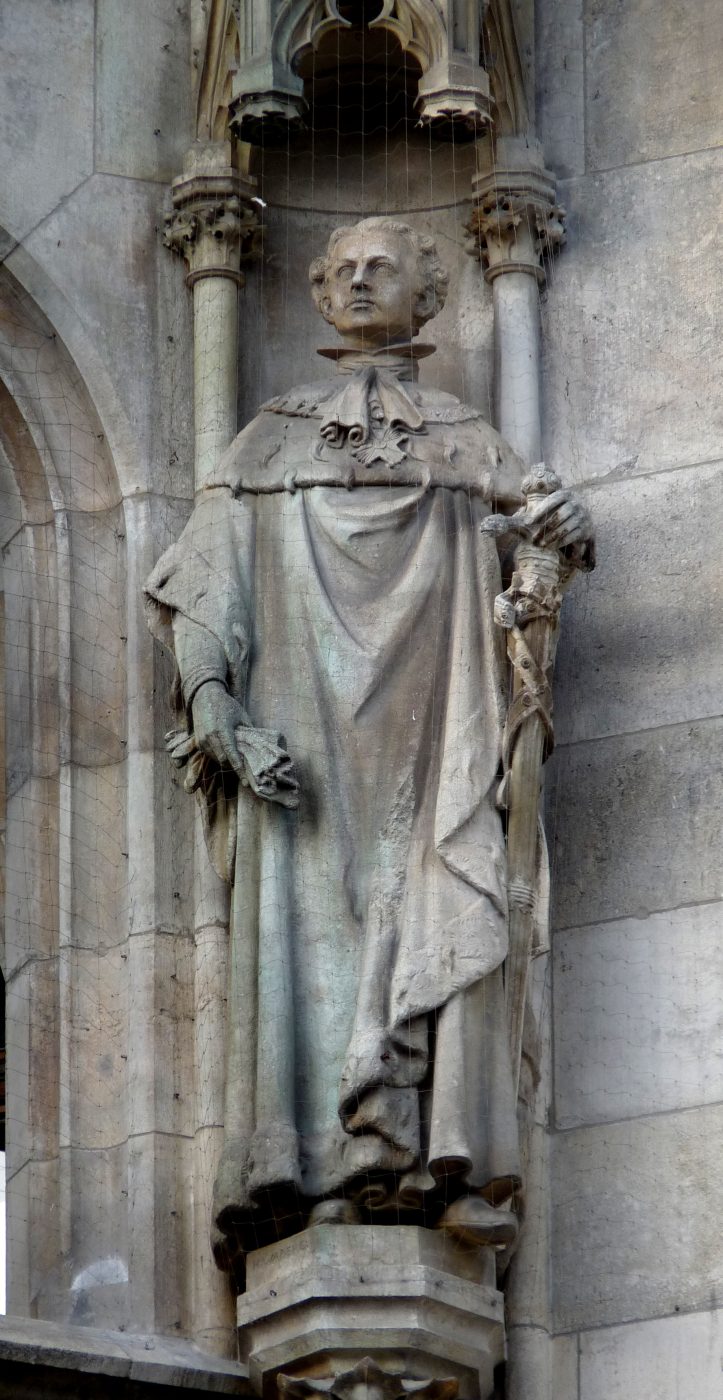
As Munich expanded rapidly during the 19th century, the need arose for a new and suitably imposing town hall. On 25 August 1867, King Ludwig II’s 22nd birthday, the foundation stone of the New Town Hall was laid, following the designs of the young architect Georg Joseph Hauberrisser.
Built in the Neo-Gothic style, the building is distinguished by its richly ornamented façade, ornate oriel windows and imposing tower. Statues of the Wittelsbach rulers, including King Ludwig II, occupy the corners of the second gallery above the arcades.
This gave the King one of his first major monuments in Munich. It is also probably the most photographed statue of Ludwig II in the city, captured by countless visitors as they explore Munich’s historic old town.
Munich – The Monument on Maximilianshöhe
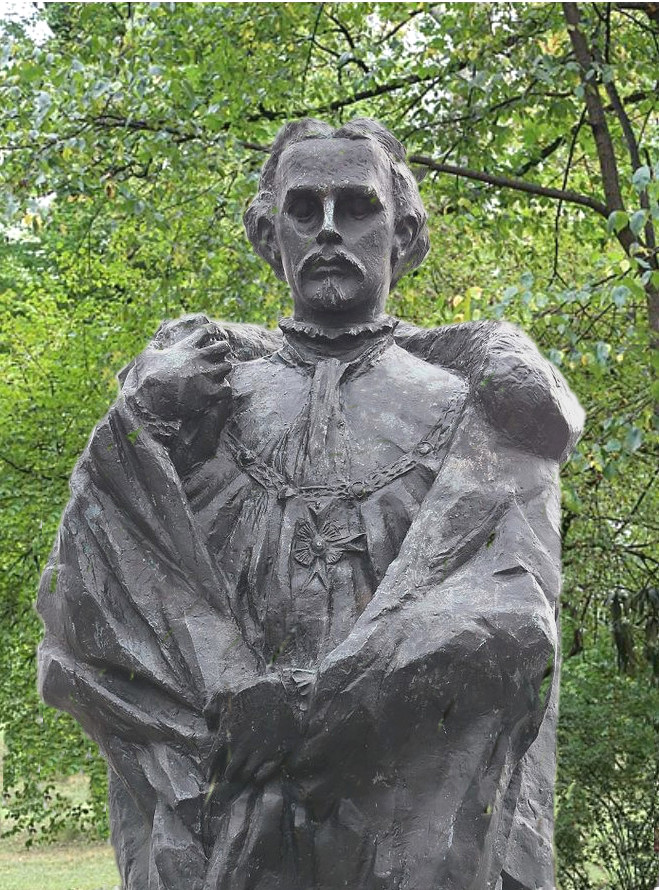
Another monument to King Ludwig II was erected in 1967 on Maximilianshöhe in Munich, close to the Maximilianeum. The sculptor Anton Rückel created it at a site steeped in history.
It was here that Ludwig II had originally planned to build a festival theatre for Richard Wagner. However, the project was never realised. Today, the monument commemorates the King’s original vision and occupies this historically significant location.
Nuremberg – The Lost Royal Monument of 1913
The Nuremberg monument was the third major monumental tribute to King Ludwig II. As early as 1866, the King had considered moving his seat of government to Nuremberg, motivated both by his affection for the Franconian city and by his enthusiasm for Richard Wagner.
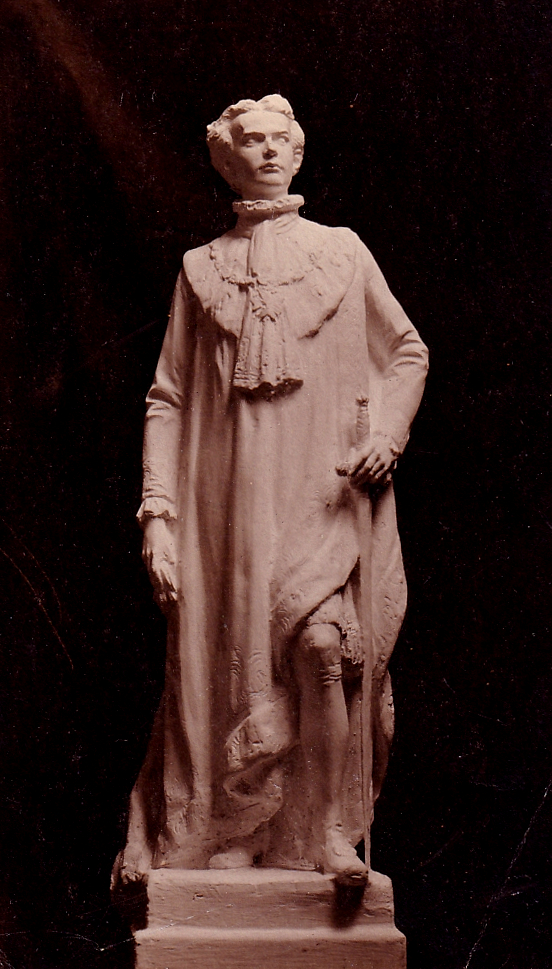
Unveiled in 1913, the monument depicted the King in the attire of a Knight of St Hubert, just like the monument formerly standing on Munich’s Cornelius Bridge. An impressive statue of the King stood atop a four-metre-high pedestal, making it the largest statue of Ludwig II ever erected at the time.
Sadly, this monument was not spared a tragic fate. In 1944, it fell victim to the so-called Reich Metal Donation (Reichsmetallspende). The bronze statue was melted down and the entire monument dismantled.
Today, all that remains at the site is a grassy area. Originally, benches had been provided to encourage visitors to linger and reflect on King Ludwig II. This idea is also intended to be revived in the design of the new monument on Munich’s Cornelius Bridge.
There is another remarkable connection between Nuremberg and Munich: here, too, the initiative to erect the monument came from a publican. Friedrich Fischer was the driving force behind the project and founded the association dedicated to creating the Nuremberg royal monument.
Fürth – A Remarkable Encounter and a Monument Dating from 1908
A particularly moving story connects King Ludwig II with the town of Fürth and a Jewish family.
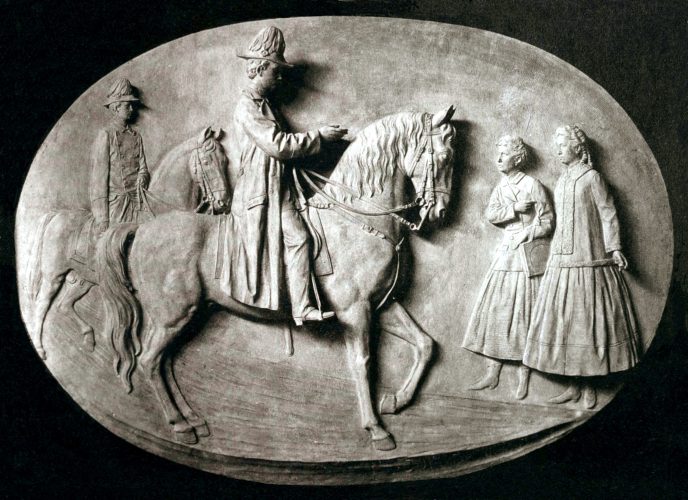
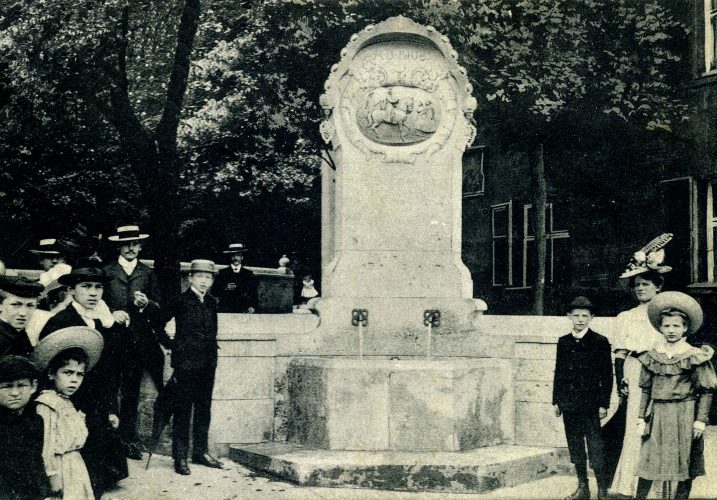
During his journey through Franconia in 1866, the King also stopped in Fürth. In the early hours of the morning, he is said to have asked a young Jewish girl named Amalie for directions to the town hall. Amalie later married the banker Sigmund Nathan. Many years afterwards, her son, Alfred Louis Nathan, found a special way of commemorating this encounter.
In 1908, Alfred Louis Nathan donated a fountain at the presumed location of the meeting. A bronze relief by the Munich sculptor Köpf depicted the scene between the young King and Amalie’s mother.
In creating the relief, the sculptor was fortunate to receive some exceptional assistance. Paul von Thurn und Taxis, one of Ludwig’s companions on his journey through Franconia and a person particularly close to the King, was still alive at the time and was able to help ensure that the figures were portrayed authentically.
Ludwig’s attitude towards his Jewish subjects also deserves attention. In a letter to Richard Wagner in 1881, he expressed his appreciation of Wagner’s sacred music drama Parsifal, in which he saw no distinction between Christians and Jews. His words were remarkable:
‘Nothing is more repugnant or distressing than such disputes; fundamentally, all human beings are brothers, despite their religious differences.’
Ludwig II expressed this conviction despite Wagner’s well-known antisemitic views.
The monument in Fürth did not escape the political upheavals of the 20th century. It was relocated in 1938. The bronze relief was initially placed in storage at the municipal depot, but in 1941 it too was melted down as part of the Reich Metal Donation. The stated justification was that it possessed no significant artistic merit.
With its destruction, a unique testament to a remarkable encounter between the King and a Fürth family was lost.
Bamberg – The Second Great Royal Monument of 1910
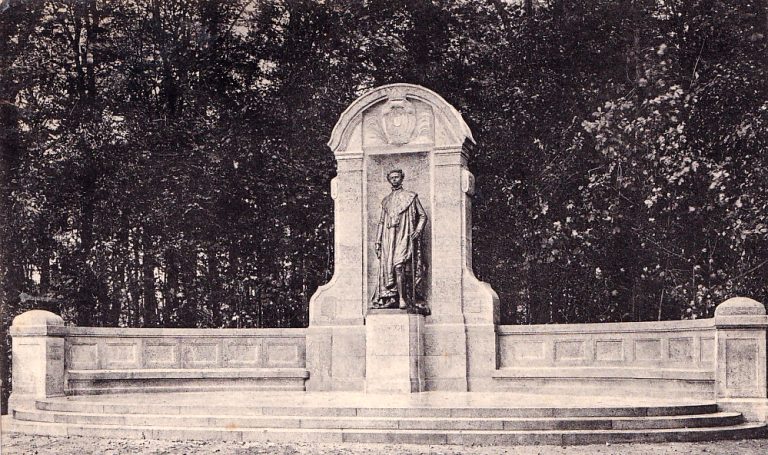
The Bamberg monument was the second major monumental tribute to King Ludwig II. It bears many similarities to the former monument on Munich’s Cornelius Bridge.
The sculptor Philipp Kittler created a life-size bronze statue of the King, whilst the surrounding stone monument was designed by Wilhelm Schmitz, the city’s chief building officer.
The monument was ceremonially unveiled in 1910 by Prince Rupprecht of Bavaria, who would later become Crown Prince.
This monument, too, was earmarked for melting down during the Nazi era. The statue had already been removed, but for reasons that remain unclear, it was ultimately spared. Today, it stands once again in its original location – a fortunate distinction that sets it apart from many other monuments to Ludwig II.
Murnau – The First Monumental Memorial to Ludwig II, 1894
The first monumental memorial to King Ludwig II was erected in Murnau in 1894. Unlike the full-length statues that followed, this monument took a rather unusual form: the King was immortalised in a colossal bust, approximately two metres high, carved from white Carrara marble.
The impressive work was created by the sculptor Johann Nepomuk Hautmann.
Its origins are noteworthy, too: the initiative for this monument also came from a publican. This provides a charming parallel with the new monument to Ludwig II on Munich’s Cornelius Bridge, whose restoration was likewise set in motion by a publican.
Kolbermoor – The First Freestanding Statue in a Public Square
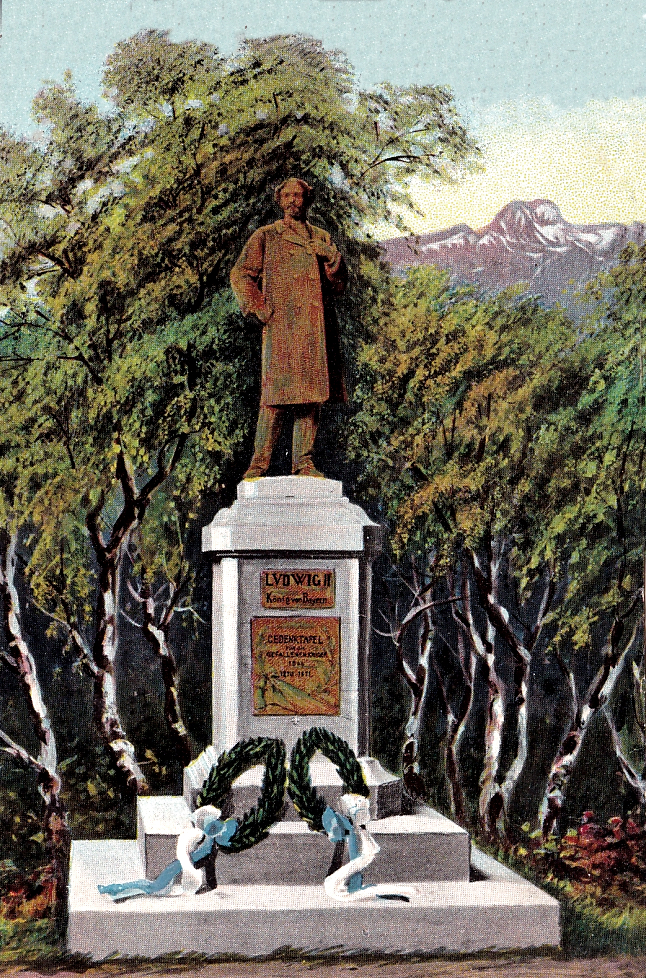
In 1909, the thriving industrial town of Kolbermoor achieved something that even the Bavarian capital had not yet managed: it erected the first freestanding statue of King Ludwig II in a public square.
The sculptor August Kaindl designed an over-life-size statue of the King, mounted on a two-metre-high plinth. Kaindl was also responsible for several other well-known works in Munich, including the monument to the Blacksmith of Kochel on Sendlinger Berg and the dragon on the Munich Town Hall.
The royal sculpture itself was executed as a galvanoplastic work by Hygin Kiene, a Munich metal sculptor who also created the Munich Child (Münchner Kindl) on the Town Hall tower.
Kolbermoor had therefore beaten the Bavarian capital to the distinction of erecting a public monument to Ludwig II. Remarkably, the statue also survived the Revolution of 1918, protected from destruction by citizen patrols.
In 1963, however, the ‘Kini’, as the beloved King is affectionately known in Bavaria, had to make way for a new fountain. The monument was subsequently relocated to the road leading towards Bad Aibling, where it stands today.
Partenkirchen – A Bust Surrounded by Nature
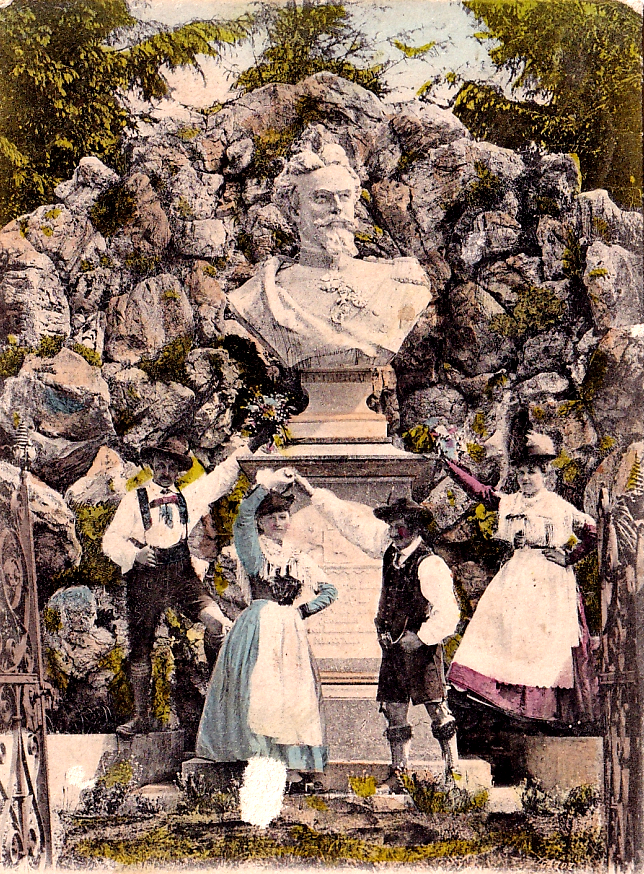
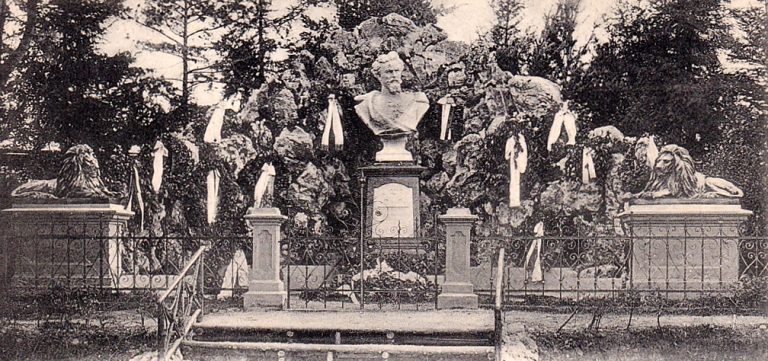
The bust of Ludwig II in Partenkirchen is a particularly atmospheric place of remembrance. Set amidst nature, it seems to occupy precisely the kind of setting the King himself might have appreciated: far removed from the noise and bustle of urban life.
One of Ludwig II’s own statements perfectly captures his longing for peace and unspoilt nature:
‘Modern civilisation, technology, greed and restless activity have still left us a peaceful place, far removed from the noise, crowds, smoke and dust of the cities.’
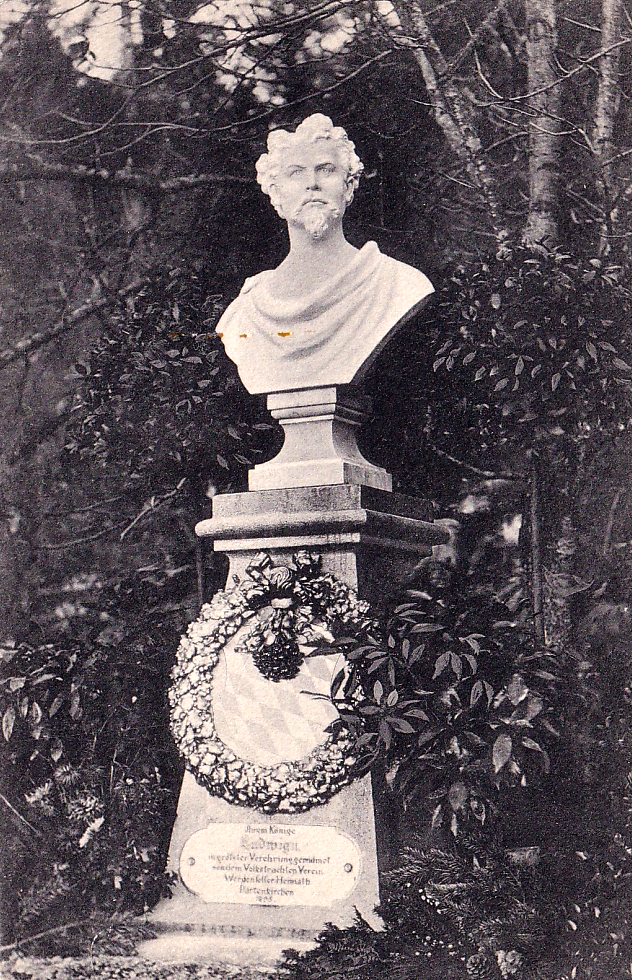
During his journeys to the Schachen, King Ludwig II frequently stayed at the Gasthof zur Post in Partenkirchen. The Munich Alpine Club Die Lustigen Wendlstoana therefore decided to commission a memorial in his honour. The first bust, made of bronze and later replaced by a marble version, was installed in the St Anton gardens, laid out around 1890 as a dedicated place of peace and tranquillity.
The surroundings were carefully landscaped: flowerbeds were arranged alongside the monument in such a way that their planting formed the letter ‘L’.
The original bust soon began to show signs of weathering. In 1906, Baroness von Zedlitz, an ardent admirer of Ludwig II, therefore donated a replacement. It was created by the Munich sculptor March.
One particularly charming detail is the direction in which the King's head is turned: the bust gazes towards the Schachen, where Ludwig II celebrated his birthday and name day every year.
Yet this monument, too, was not spared the forces of nature. On 13 June 1910, the 24th anniversary of the King's death, torrential rain caused a landslide. Fortunately, the bust was rescued in time and later reinstalled at its original location.
Zorneding – A War Memorial Becomes a Monument to the King
Many war memorials throughout the German Empire commemorated the victorious wars of the 19th century. Alongside the princes and generals who had taken part, King Ludwig II was frequently depicted.
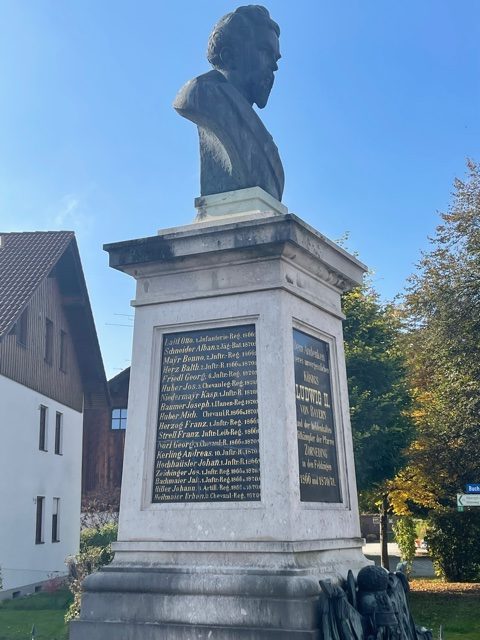
In Zorneding, however, the King was given a particularly prominent position: the war memorial was crowned with a bust of Ludwig II, effectively transforming it into a monument to the King in its own right.
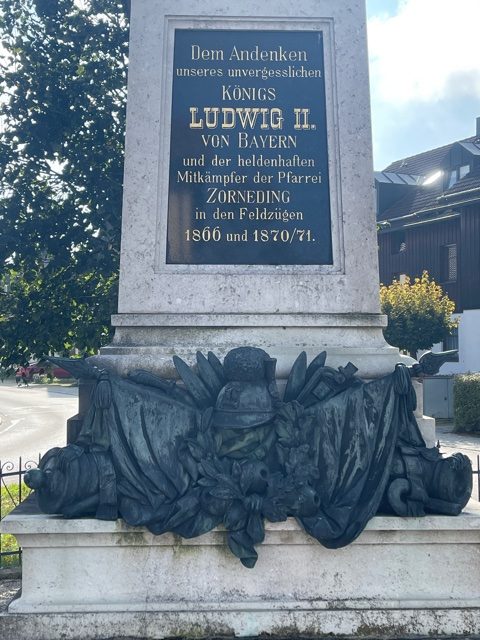
As King of Bavaria, Ludwig II was also the supreme commander of the armed forces. He frequently visited his troops wearing splendid military uniforms. One distinctive feature of the Zorneding memorial is that it commemorates not only the Franco-Prussian War of 1870–71 but also the Austro-Prussian War of 1866, often referred to as the German War.
The pedestal was crafted by a master stonemason from Ebersberg using granite and Untersberg marble – the very same marble used for the historic Ludwig II monument on Munich’s Cornelius Bridge.
The military trophies were made of galvanic bronze. The over-life-size bust of the King was also originally cast in bronze, based on a model by the Munich sculptor Professor Johann Nepomuk Hautmann.
However, the bust fell victim to the German Empire’s wartime demand for raw materials during the First World War. In 1923, it was replaced by a marble bust. At the same time, the memorial was extended to include the names of those who had fallen in the First World War.
In 1986, on the centenary of Ludwig II’s death, the monument, by then severely weathered, underwent a comprehensive restoration. The marble bust in particular had deteriorated so badly that a third version had to be commissioned. This time, bronze was chosen once again.
Zorneding thus received its third bust of the King, preserving a monument that commemorates both Bavarian history and the enduring memory of Ludwig II.
One King, Many Monuments – A Shared Story
The monuments to Ludwig II throughout Bavaria are far more than mere memorials in stone and bronze. They tell the story of the enduring admiration for a King whose personality continues to fascinate people to this day. They bear witness to the dedication of citizens, artists and publicans who worked to preserve his memory, whilst also reminding us of the losses caused by war and the National Socialist regime’s confiscation of metal.
Some monuments still stand in their original locations; others have been relocated or lost for ever. This makes the reinstatement of the monument to Ludwig II on Munich’s Cornelius Bridge all the more significant.
What was once achieved through civic commitment has now been made possible once again by a new generation of dedicated individuals. King Ludwig II has reclaimed his place in Munich.