King Ludwig II and Technology
King Ludwig II and the Dawn of Technological Progress in Munich and Bavaria
How a King embraced cutting-edge technology to realise his visions and looked far beyond the limits of his time
When Ludwig II ascended the Bavarian throne in 1864, Europe was in the midst of a period of profound transformation. The Industrial Revolution was reshaping people's lives, new inventions were opening up unprecedented possibilities, and science, technology and engineering were advancing at a remarkable pace. Munich and Bavaria, too, were becoming important centres of this technological awakening.
King Ludwig II is chiefly associated with his fairy-tale castles, his passion for art and music, and his extraordinary way of life. Less well known, however, is his keen interest in technological innovation and the extent to which he embraced modern developments in pursuit of his architectural projects and personal visions. His castles were by no means merely romantic dream worlds; they were also remarkable showcases of advanced engineering.
Whilst Ludwig II was creating a world of his own, Bavaria was experiencing an era of groundbreaking inventions. New photographic and printing processes were emerging, electrical engineering and mechanical engineering were making enormous strides, and visionary inventors were embarking on the earliest experiments in aviation. Munich was developing into an important centre of science, research and technological innovation.
Iron, Glass and Daring Designs – The King as a Patron of Engineering
Ludwig II expected his architects and engineers to deliver not only artistic perfection but also technical solutions that met the highest standards of the day. This was particularly evident in the construction of his castles, Neuschwanstein and Herrenchiemsee.
Rather than relying exclusively on traditional building methods, modern iron structures were incorporated into their designs. Massive iron I-beams were built into ceilings to span large spaces and reduce the structural load on the rooms below. Columns made from cast-iron tubes carried the weight of the structures and were subsequently clad in imitation marble stucco. Even the domes were constructed using delicate iron frameworks.
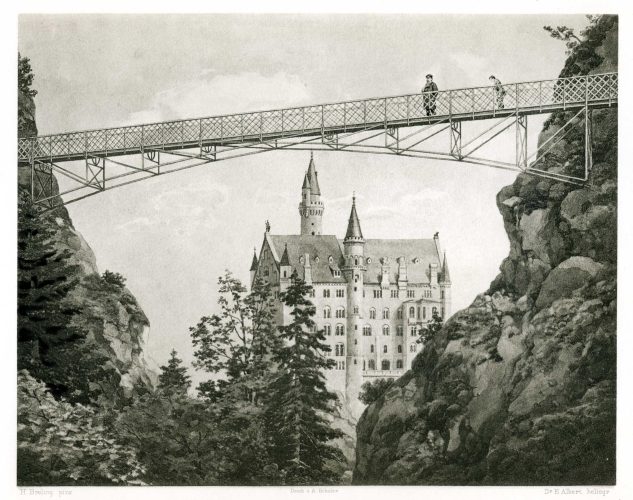
Elsewhere, too, pioneering engineering projects made their mark. In 1866, Heinrich Gerber developed and patented an improved structural system of iron girders. Meanwhile, a 35-metre-high iron bridge was built across the Pöllath Gorge near Hohenschwangau – a remarkable example of how modern engineering could be harmoniously integrated into an Alpine landscape.
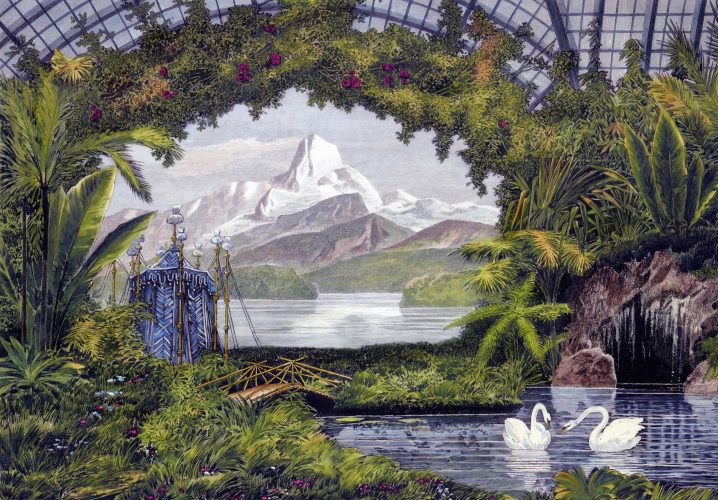
The most spectacular iron-and-glass structure of the period, however, was undoubtedly the royal Winter Garden on the roof of Munich Residenz. This extraordinary construction spanned a vast space without the need for obstructive internal supports, creating an almost fairy-tale atmosphere beneath its glass roof. It was an engineering masterpiece that attracted attention far beyond Bavaria.
Warmth and Comfort – Modern Heating in the Royal Castles
What we take for granted today presented a considerable technical challenge in the 19th century: heating large rooms reliably and comfortably. Ludwig II was determined not to compromise on comfort, even in his extensive palace complexes.
Neuschwanstein and Herrenchiemsee were therefore equipped with sophisticated warm-air heating systems known as Calorifère installations. Heated air was distributed to the individual rooms through a network of ducts. To prevent the indoor air from becoming too dry, its humidity could be regulated by introducing fresh water into the heating system.
The royal bathrooms were equally well equipped with the latest technology. Modern water heaters ensured that bathwater could be brought to the desired temperature. In this way, Ludwig II combined the romantic splendour of his palace world with a level of comfort that was far from commonplace at the time.
Steam Power and Electricity – The Future Arrives
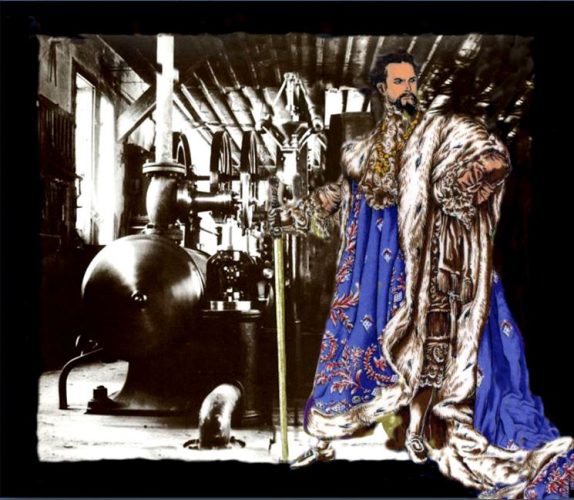
The steam engine was one of the most significant inventions of the 19th century. It revolutionised working life, made it easier to transport heavy loads and enabled increasingly powerful machinery to operate. Steam power also played a central role in Ludwig II’s royal building projects.
During the construction of Neuschwanstein, state-of-the-art steam-powered construction machinery and cranes were employed. These made it possible to transport heavy building materials and carry out the demanding construction work more efficiently. The extensive fountains and water features at Herrenchiemsee also required powerful machinery to move the enormous quantities of water involved.
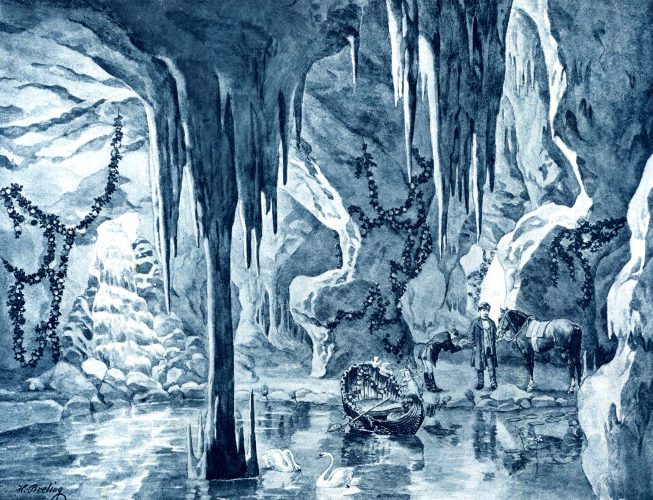
A particularly remarkable chapter in Ludwig II’s story was written at the artificial grotto in the grounds of Linderhof Palace. In 1878, a dedicated electricity-generating station was established there. The Nuremberg-based company Schuckert and the French company Gramme supplied a total of 24 dynamos to generate the electricity required. This enabled arc lamps to illuminate the grotto and the Moorish Kiosk, bathing them in a fascinating light.
Electric lighting was still a technological sensation at the time. What we now regard as perfectly ordinary represented an enormous leap forward in the late 19th century. Ludwig II was among the first monarchs to make such extensive use of this new technology in his private building projects.
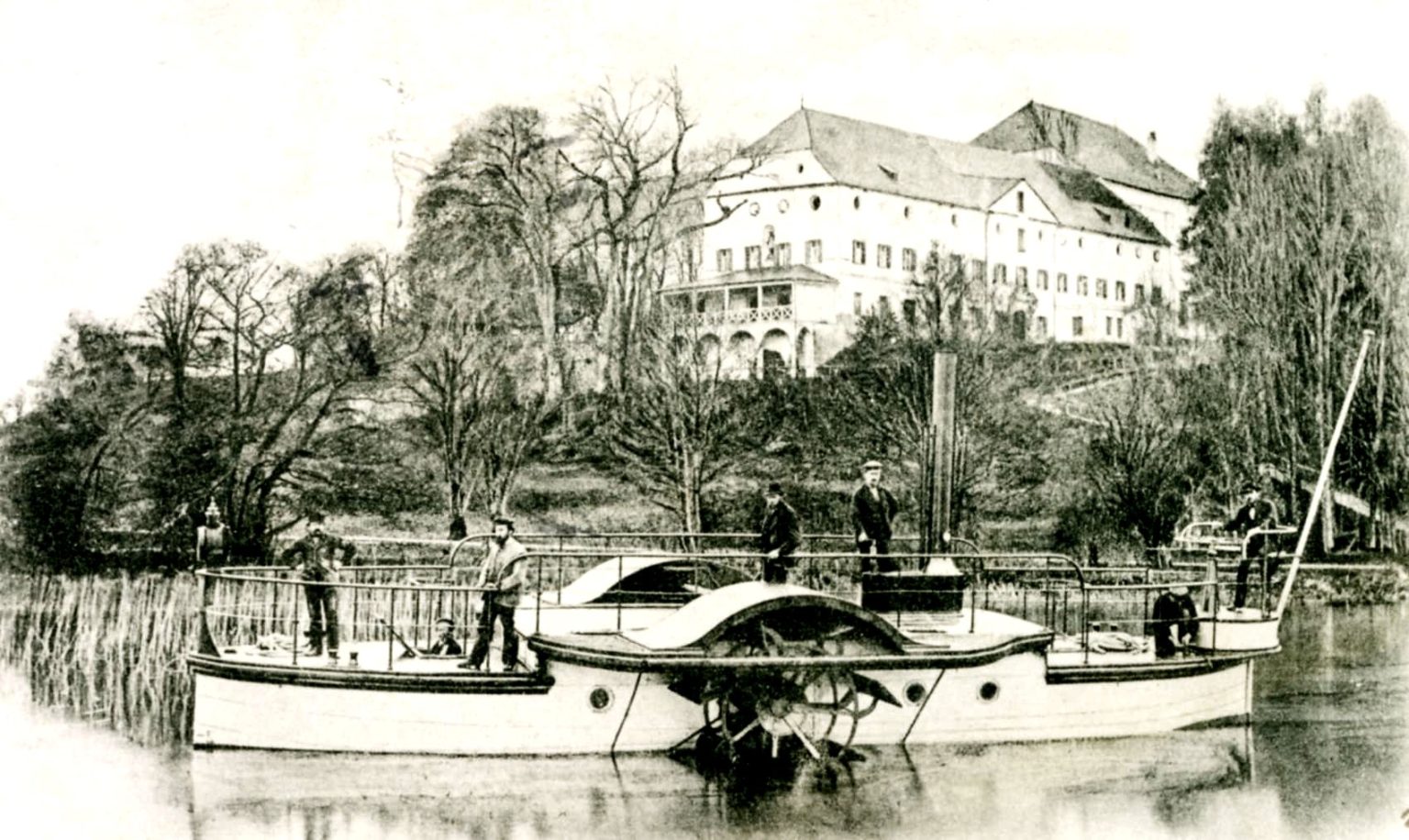
The royal transport system also benefited from steam power. In order to move the enormous quantities of building materials required for Herrenchiemsee to the island, the Royal Court Building Authority commissioned a tugboat in 1878 from the Hirschau Engineering Works, part of J. A. Maffei. The vessel transported the materials across the lake, where a steam-powered narrow-gauge railway carried them onwards to the construction site. This was a remarkable logistical achievement for its time!
Safety Through Technology – The Birth of Technical Inspection
The use of steam power, however, also involved considerable risks. In particular, exploding steam boilers posed a serious safety hazard throughout the 19th century.
To address this problem, the Bavarian Steam Boiler Inspection Association (Bayerischer Dampfkessel-Revisions-Verein) was founded in Munich in 1870. Its purpose was to inspect steam boilers regularly and ensure the safety of installations through technical checks.
King Ludwig II was among the organisation's early clients. In this way, the King not only championed the use of cutting-edge technology but also supported its safe application.
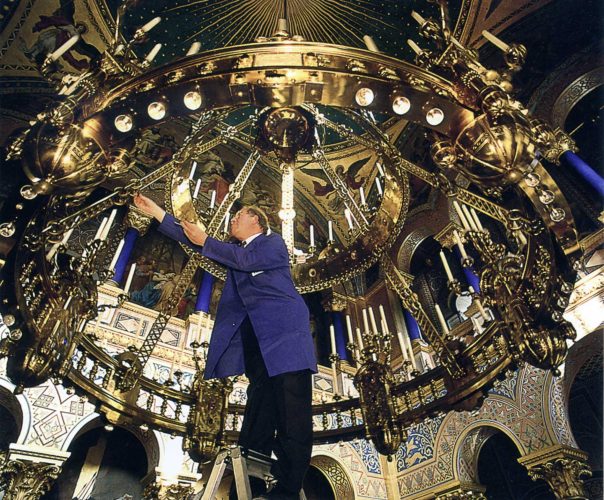
This development ultimately gave rise to an institution whose importance continues to this day: TÜV SÜD. The royal castles are still inspected by technical experts. Whereas steam boilers once required regular checks, today's inspections include, among other things, ensuring that enormous chandeliers are safely secured and suspended.
A King in Electric Light – The Grotto at Linderhof
The artificial grotto in the grounds of Linderhof Palace was one of Ludwig II’s most extraordinary artistic and technological projects. Inspired by the operatic world of Richard Wagner, the King commissioned a fantastical cavern complete with a lake, an artificial waterfall and elaborate lighting effects.
The atmosphere created by the lighting was particularly important to him. He wanted the water to glow with a deep, intense blue reminiscent of the precious gemstone lapis lazuli. At the same time, the light had to be sufficiently bright to allow reading.
Finding precisely the right shade presented scientists and chemists with a demanding challenge. The King's wishes illustrate just how closely art, technological development and chemical research were intertwined during this period.
The Bavarian and German dye industries were also undergoing a period of rapid development. In 1883, the chemist Adolf von Baeyer achieved the first complete synthesis of the indigo dye in Munich. The industrial production of synthetic indigo subsequently became a major success for the chemical industry, making possible, among other things, the characteristic blue colouring of denim fabrics.
From the Four-Stroke Engine to Modern Printing Machinery – Bavaria as a Land of Invention
Whilst Ludwig II was realising his technological visions in his royal palaces, inventions were emerging in Munich and other Bavarian cities that would eventually have an impact far beyond the region.
One particularly remarkable example was the Munich watchmaker and mechanic Christian Reithmann. In 1873, he developed a four-stroke engine, which ranks among the milestones in the early history of motor engineering. His work forms part of the story of the development of the modern internal combustion engine.
Printing technology was also making enormous strides. In 1873, Heinrich Butz developed a machine for printing on continuous rolls of paper at the Augsburg Engineering Works. It became one of the major attractions at the Vienna World's Fair and heralded a new era in industrial printing.
In 1875, a rotary printing press was built in Oberzell near Würzburg. In 1881, Georg Meisenbach invented the halftone process (Autotypie) in Munich, an important technique for reproducing photographic images in print. This made it considerably easier to reproduce photographs in newspapers and books, with much greater detail.
Photography itself was also advancing. In 1869, Josef Albert developed the collotype printing process (Lichtdruck) in Munich, a high-quality printing technique that enabled photographs and works of art to be reproduced with exceptional fidelity.
These developments vividly demonstrate just how diverse and dynamic Bavaria's technological landscape had become during the second half of the 19th century.
Electricity for All – Munich Becomes a City of Progress
Electrification was among the most exciting technological developments of the period. In 1870, the mechanic Sigmund Schuckert established an engineering workshop in Nuremberg, which would eventually grow into an important electrical engineering company. Schuckert devoted himself to the development of electrical machinery and built powerful dynamo-electric generators.
Munich, too, became the setting for important innovations. During the construction of the Braunau Bridge in 1871, electric lighting was used for the first time in the form of dynamo-powered arc lamps.
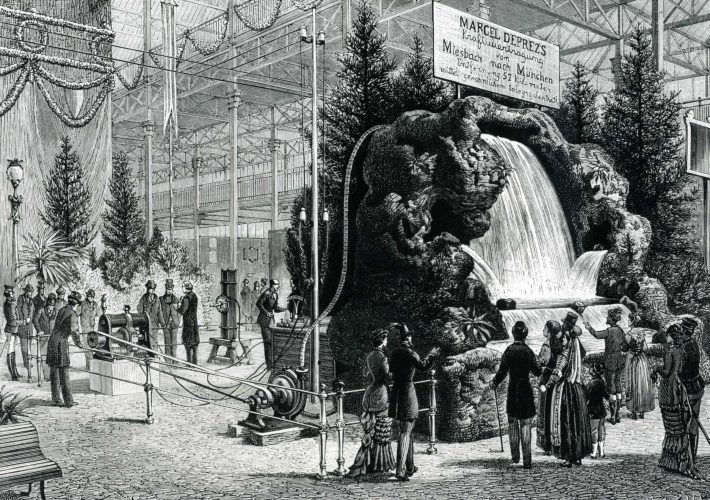
A particular highlight was the first Electrical Engineering Exhibition in Munich in 1882. The engineer Oskar von Miller demonstrated a technological sensation: the transmission of electrical energy over a distance of approximately 57 kilometres, from Miesbach to Munich. This impressive experiment vividly demonstrated the enormous potential of electrical power distribution.
In the same year, electric street lighting was put to the test in Munich. Another technological innovation also found its way into the royal residence: the telephone.
Ludwig II followed these developments with considerable interest. He also became patron of the major Industrial Exhibition in Nuremberg in 1882, demonstrating his commitment to Bavaria's technological and economic progress.
Ludwig's Dream of Flight – Visions Above the Clouds
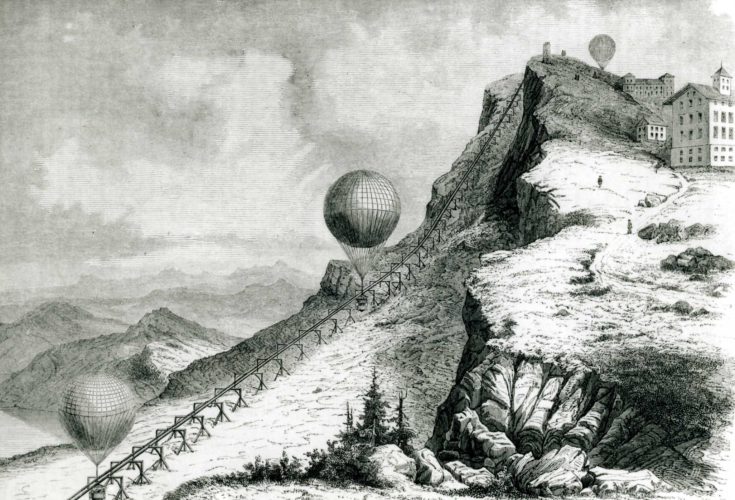
Perhaps the most striking expression of Ludwig II's extraordinary inventive imagination was his fascination with aviation. As early as 1869, he conceived an unusual aerial cableway at Hohenschwangau.
Inspired by reports about the Rigi mountain railway in the magazine Die Gartenlaube, he planned a steam-powered aerial cableway that would cross Lake Alpsee. It was a technological challenge far ahead of its time. Ultimately, the project foundered because of the technical limitations of the period, particularly the inability to span such a distance safely without suitable supporting structures.
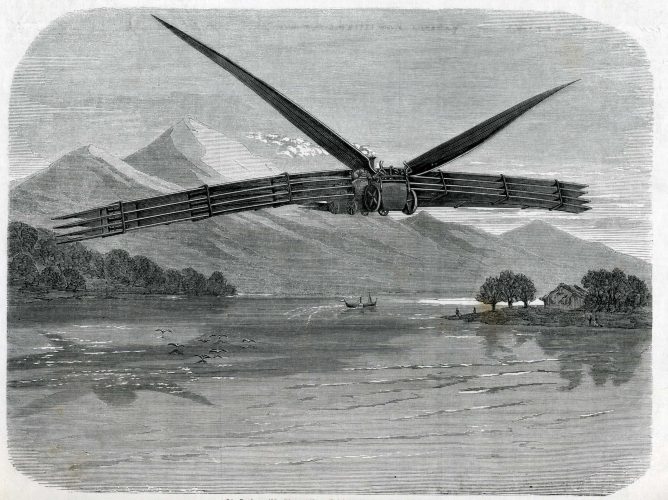
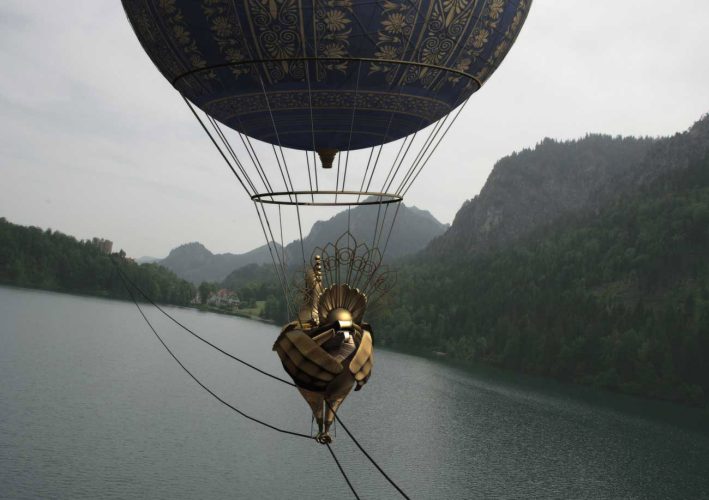
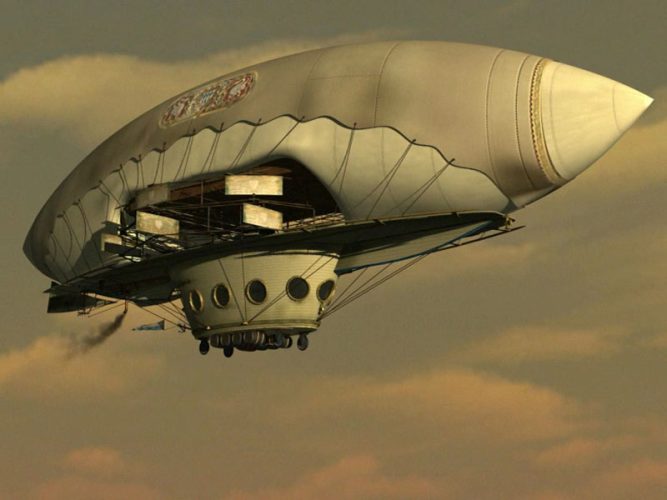
But the King refused to abandon his dream of flight. He took a keen interest in visionary flying machines and the development of steerable airships. Even a gigantic steam-powered flying machine known as the Taube (Dove) was among the projects that attracted his attention.
Ludwig II gave particular support to Gustav Koch, an aeronaut living in Munich who was working on a steerable balloon. In correspondence with Friedrich Brandt in 1883, the King returned to his ideas for developing a steerable flying machine. In the same year, Koch presented a model of his airship project at Munich's Glaspalast.
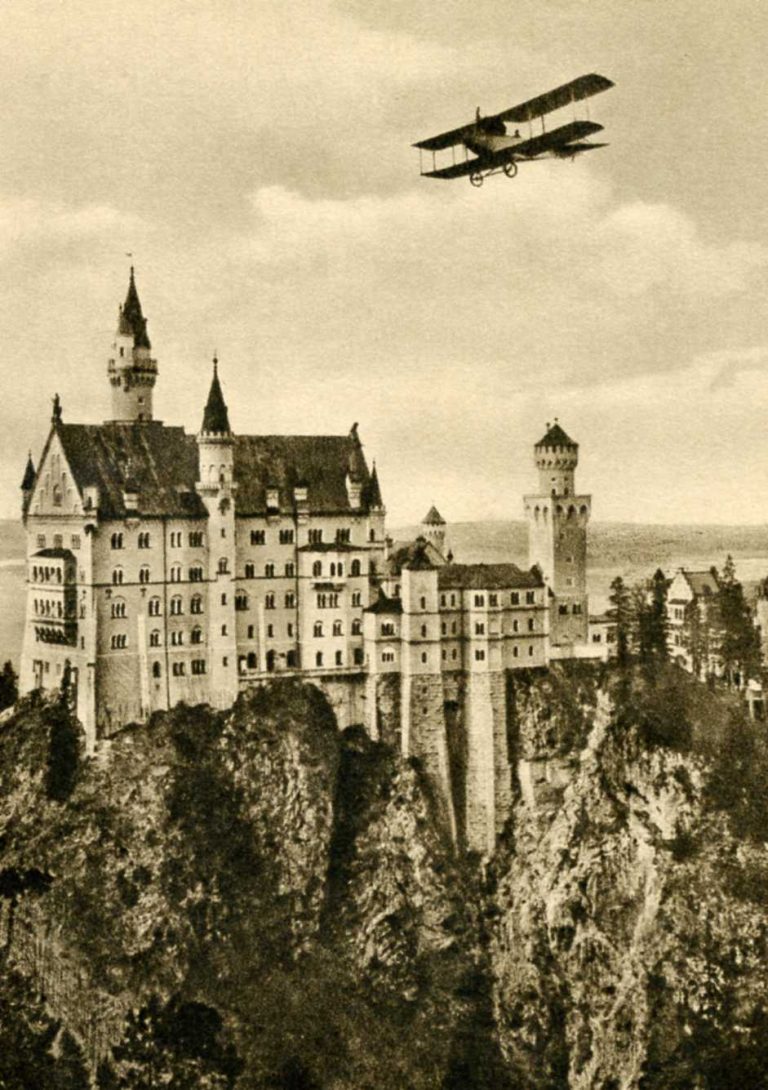
It is fascinating to imagine how Ludwig II might have reacted had he lived to witness the later achievements of aviation. In 1886, the King died in Lake Starnberg at the age of just 40. Only a few years later, in 1891, Otto Lilienthal began his pioneering gliding experiments. Then, in 1900, Count Ferdinand von Zeppelin took to the skies in his first airship.
Ludwig II did not live to witness the development of aviation. Nevertheless, his fascination with this emerging technology reveals just how far his imagination extended beyond the limits of what was then considered possible.
A King Between Romanticism and Progress
When Ludwig II died in 1886, an extraordinary era came to an end. Yet Bavaria's technological transformation continued. In 1888, a major industrial exhibition was held in Augsburg; in 1892, an early motorcycle was built in Munich; and in 1895, the city's first electrically powered tram began operating. In 1898, Nuremberg saw the start of large-scale industrial production of Germany's first typewriter.
Many of these developments had already been set in motion during Ludwig II's reign. They demonstrate that 19th-century Bavaria was by no means merely a land of tradition and magnificent royal castles. It was also an important centre of technological innovation.
Ludwig II was a King who was not content simply to preserve the existing order. He was fascinated by new possibilities, encouraged technological experiments and used the most advanced means available in his day to bring his extraordinary visions to life. Whether in iron structures, steam power, electric lighting, modern heating systems or the earliest concepts of aviation, he repeatedly combined his personal dreams with technological progress.
Perhaps this reveals one of the lesser-known yet most fascinating aspects of his personality: behind the romantic image of the Fairy-Tale King was a ruler who followed the technological developments of his age with keen interest and repeatedly allowed himself to be inspired by innovation.
Ludwig II was not merely a King of dreams. He was also a King who used technology to turn dreams into reality.